Beyond Microbiome Composition: The Shift Toward Functional Gut Health Assessment

What is the Best Way to Evaluate Gut Health? Moving Beyond the Microbiome
For years, conversations around gut health have centered largely on evaluating microbiome composition — identifying which organisms are present within the gastrointestinal tract and how microbial patterns differ between individuals.
But emerging research suggests that gut health assessment requires more than microbial composition alone.
Increasingly, researchers and clinicians are moving toward a broader understanding of gut health that includes gastrointestinal function, host response, metabolic activity, immune signaling, and system-level interactions.
This shift raises an important clinical question:
What does stool testing measure, and how can clinicians assess gut function beyond microbiome composition?
The research below reflects the growing movement toward functional gut health assessment and more comprehensive approaches to clinical stool testing.
Research Driving the Shift Toward Functional Gut Health Assessment
ISAPP Consensus Statement on Gut Health
A recent consensus statement reinforces that defining and evaluating gut health requires measurable indicators of gastrointestinal function.
The International Scientific Association for Probiotics and Prebiotics (ISAPP) proposed several key functional domains that constitute gut health, including digestive physiology, gut microbiome, intestinal epithelium, immune system, gut endocrine function, and the gut-brain axis.
This framework expands gut health assessment beyond microbiome composition alone and highlights the importance of clinical context, host physiology, and functional gastrointestinal measures.
From Microbiome to Metabolism: Bridging the Translational Gap
Emerging microbiome science increasingly supports functional, systems-based, and personalized models of gut health assessment.
Rather than relying exclusively on static microbial data, researchers are exploring host-microbiome interactions, metabolic activity, and measurable biological outputs that may better reflect clinical function.
Rethinking Microbiome Health Through Functional Dynamics
Current research increasingly describes the gut as a dynamic and adaptive system.
This perspective shifts attention from microbial presence alone toward microbiome function, resilience, gastrointestinal integrity, and the gut’s ability to maintain physiologic balance over time.
Together, these publications highlight an important evolution in clinical gut health assessment.
qPCR vs Sequencing Microbiome Testing: Expanding Gut Health Assessment
Different testing approaches evaluate different aspects of gastrointestinal health.
While some forms of microbiome testing primarily emphasize microbial composition and community patterns, GI‑MAP® is a diagnostic gut health test that allows practitioners to evaluate H. pylori, pathogenic organisms, parasites, and commensal bacteria, while also including intestinal health markers to support the investigation of complex gastrointestinal and multisystem presentations.
This broader clinical framework reflects the growing research emphasis on microbiome composition vs function and supports a more complete approach to functional gut health assessment.
Clinical Stool Testing for Symptomatic and Complex Patients
For patients experiencing persistent or complex symptoms, clinicians often need more clinical information than microbiome composition alone can provide.
Patients with gastrointestinal complaints, IBS, IBD, digestive dysfunction, chronic inflammation, skin conditions, mood and hormone imbalances, and other multisystem presentations need more comprehensive assessment. Diagnostic stool testing provides deeper, quantitative clinical information related to microbial patterns, gastrointestinal function, inflammation, digestion, and immune activity to help practitioners investigate potential gastrointestinal contributors to complex symptoms.
GI-MAP provides this deeper level of clinical assessment by combining microbial evaluation with clinically relevant markers to help practitioners investigate potential drivers of complex presentations and develop more targeted, individualized approaches to care.
GI-MAP® Stool Test
Explore GI‑MAP Resources 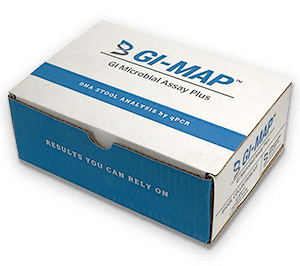

Diagnostic Solutions Laboratory
Brought to you by the Diagnostic Solutions Laboratory team. Our commitment is to serve the clinical needs of the health care provider with cutting-edge laboratory medicine by utilizing proven methodologies that are accurate and reliable.
The opinions expressed in this presentation are the author's own. Information is provided for informational purposes only and is not meant to be a substitute for personal advice provided by a doctor or other qualified health care professional. Patients should not use the information contained herein for diagnosing a health or fitness problem or disease. Patients should always consult with a doctor or other health care professional for medical advice or information about diagnosis and treatment.