Why Clinicians Trust GI-MAP to Optimize Clinical Outcomes - The Power of qPCR Precision and Comprehensive Assessment


Gut health testing has exploded in popularity. But for many clinicians, it has also become confusing. Between clinical-grade diagnostic tests and consumer microbiome kits promising thousands of microbes, how can you tell what really matters?
While new tests are entering the market with long lists of organisms, more isn’t always better. What matters most in stool testing isn’t how many microbes a test can name, but how accurately it can identify what’s clinically relevant. That’s why practitioners around the world continue to trust the GI‑MAP® - Gastrointestinal Microbial Assay Plus — a qPCR-based stool test built for precision, reliability, and clinical action.
Different Tools, Different Insights: Understanding Stool Testing Methods
Stool testing has advanced dramatically over time, moving beyond culture plates and microscopy to encompass sophisticated DNA-based technologies. While these advancements have unlocked new research and clinical possibilities, they’ve also made test selection and application more nuanced. The direct comparison of different testing methods is a bit like comparing apples to oranges, and understanding the utility of each method helps you choose the right tool for your clinical goals.
The Key Differences Largely Come Down to Purpose and Precision:
-
Shotgun metagenomic sequencing is widely used in research settings and is becoming more common in consumer microbiome tests. This method identifies a broad range of bacterial DNA and reports it in terms of relative abundance, or how each organism compares to others as a percentage of the total microbial population. While this data is fascinating for research and provides valuable insights into overall microbiome diversity and function, it often lacks the clinical relevance needed to uncover the root causes of patient symptoms.
Sequencing approaches can yield variable results, as accuracy depends on factors such as read length (the number of base pairs sequenced from each DNA fragment) and sequencing depth (how many times each sequence is read). Higher read counts generally improve accuracy, particularly for the detection of lower-abundance microbes, but this increases cost and turnaround time.1-4 Metagenomic sequencing results may take several weeks to return, which can delay patient care. It may also be more challenging to track true clinical change over time, as relative abundance data reflects proportional rather than absolute values. This means that shifts in one category automatically affect the reported levels of others.5 Finally, metagenomic sequencing tests usually only offer microbiome exploration; they may not include intestinal health chemistries for a more comprehensive view of inflammation, immune balance, and digestion. These additional analytes can provide critical insight when helping to uncover the root of a patient’s symptoms. -
Quantitative polymerase chain reaction (qPCR), the technology behind the GI‑MAP, targets the most clinically significant microorganisms with exceptional specificity and sensitivity. A key advantage of qPCR is its ability to both detect and quantify specific, pre-selected targets, such as pathogens and low-abundance opportunistic microbes that may be linked to various clinical conditions.1 For example, the GI‑MAP can detect H. pylori as low as 100 copies of DNA per gram of stool (1.00e2). Opportunists such as Pseudomonas, Morganella, Klebsiella, and Candida, are often detected at E2–E3 levels (100–1,000 cells per gram of stool). By contrast, metagenomic sequencing typically detects these organisms only at E5–E7 levels (100,000–10,000,000 cells), making it easy to miss subtle but clinically relevant overgrowth or infections.
Unlike sequencing-based methods that report microbial DNA in relative percentages, qPCR provides absolute quantification in real-time, offering a true measure of how much of an organism is present per gram of stool. For practitioners, that precision matters. The microbiome is a delicate ecosystem where even small increases in aggravating organisms or commensal imbalances can influence inflammation, digestion, or immune response. qPCR provides the clarity to see those shifts and monitor them over time.
In functional and integrative medicine, that kind of accuracy is essential for optimizing patient outcomes. GI‑MAP qPCR reports are released in 7–10 business days, which means treatments can begin weeks sooner than with other testing options. This is a critical advantage for patients with chronic or severe gastrointestinal complaints. The GI‑MAP also includes a full panel of intestinal health chemistries, helping practitioners interpret microbiome health and gut function all from a single sample.
Do More Markers Mean a Better Gut Health Test? Why Marker Count Isn’t a Measure of Clinical Applicability
In today’s gut-testing landscape, marketing often equates “more markers” with “better science.” But quantity does not equal quality. A list of thousands of microbes may look impressive, yet many of those organisms are investigative, or lack validated links to clinical outcomes. Metagenomic sequencing is best suited for research, where the goal is to explore microbial communities and discover new organisms. Yet large, complex panels can overwhelm clinicians with pages of data, making it difficult to efficiently pinpoint what is most relevant for designing targeted protocols and patient care.
Actionable testing means focusing on markers that are tied to real-world physiology, pathology, and patient progress. The GI‑MAP® - Gastrointestinal Microbial Assay Plus was designed around this principle. It measures key pathogens, opportunists, commensal bacteria, parasites, and fungal targets that are well researched and directly influence gastrointestinal and systemic health. The test report is concise, well organized, and easy to navigate.
It also includes markers like Helicobacter pylori, which remains one of the most clinically relevant infections worldwide,6 but is often omitted or not easily detected with sequencing microbiome panels.
Precision testing allows practitioners to connect data to intervention. A high-sensitivity qPCR result for low abundance opportunistic organisms like Pseudomonas spp. or Candida spp., for example, prompts targeted antimicrobial protocols and follow-up testing for eradication — something relative-abundance reports simply can’t provide.
The bottom line: meaningful stool analysis isn’t about the number of organisms reported; it’s about delivering accurate and actionable information that helps practitioners make confident clinical decisions.
Consumer vs. Clinical Testing: The Key Difference
In the current marketplace, stool testing falls into two broad categories: consumer microbiome tests and clinical diagnostic tests. Both use DNA technology, but they serve very different purposes.
Consumer microbiome tests offer broad overviews of the gut ecosystem with relative abundance results and lifestyle tips. These reports can be interesting for personal wellness check but rarely translate into actionable protocols.
Clinical diagnostic stool tests, like the GI‑MAP, are held to a higher standard. Every marker on the report has been clinically validated and correlated with physiological function or dysfunction. While direct-to-consumer tests only report microbial composition, the GI‑MAP includes critical intestinal health markers for a broader assessment of gut function.
Included Markers:
- Digestion: Steatocrit (fat malabsorption), Pancreatic Elastase
- GI Markers: Beta-glucuronidase, Occult Blood – FIT
- Immune Response and Inflammation: Secretory IgA, Anti-gliadin IgA, Eosinophil Activation Protein (EDN, EPX), Calprotectin
To achieve similar clinical insight, practitioners must order additional chemistry panels or separate qPCR add-ons through “pro” or “comprehensive” versions of sequencing tests. This increases cost and turnaround time and may require additional collections. With the GI‑MAP, practitioners receive both microbial identification and the functional chemistry data needed to create targeted, evidence-based treatment plans that drive meaningful, measurable healing.
In Short:
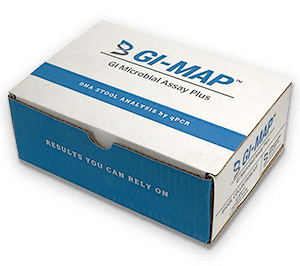
The GI‑MAP isn’t designed to impress with volume — it’s designed to deliver clinical clarity. For practitioners, the greatest value comes from data that clearly links to patient outcomes and guides next steps in care. GI‑MAP has set the standard for functional stool testing through its qPCR precision and validated intestinal health markers, helping clinicians deliver effective care with confidence.
Learn More About GI‑MAP Methodology

For clinicians who want to take a deeper look at how the GI‑MAP works, our Methodology Guide explains the qPCR technology, validation process, and marker selection that make the test the gold standard in functional stool testing.

Diagnostic Solutions Laboratory
Brought to you by the Diagnostic Solutions Laboratory team. Our commitment is to serve the clinical needs of the health care provider with cutting-edge laboratory medicine by utilizing proven methodologies that are accurate and reliable.
The opinions expressed in this presentation are the author's own. Information is provided for informational purposes only and is not meant to be a substitute for personal advice provided by a doctor or other qualified health care professional. Patients should not use the information contained herein for diagnosing a health or fitness problem or disease. Patients should always consult with a doctor or other health care professional for medical advice or information about diagnosis and treatment.
References
- Sezgin E TG, Bozkurt B, Bengi G, Akpinar H, Büyüktorun. Quantitative real-time PCR analysis of bacterial biomarkers enable fast and accurate monitoring in inflammatory bowel disease. PeerJ. 2022;10(e14217) doi:10.7717/peerj.14217
- Durazzi F SC, Castellani G, Manfreda G, Remondini D, De Cesare A. Comparison between 16S rRNA and shotgun sequencing data for the taxonomic characterization of the gut microbiota. Sci Rep. 2021;11(1):3030. doi:doi:10.1038/s41598-021-82726-y
- Derosa L IV, Silva CAC, et al. Custom scoring based on ecological topology of gut microbiota associated with cancer immunotherapy outcome. Cell. 2024;187(13):3373-3389.e.16. doi:10.1016/j.cell.2024.05.029
- Yan Z HT, Yan Y, et al. Quantitative and dynamic profiling of human gut core microbiota by real-time PCR. Appl Microbiol Biotechnol. 2024;108(1):396. doi:10.1007/s00253-024-13204-4
- Jian C LP, Yki-Järvinen H, Salonen A, Korpela K. Quantitative PCR provides a simple and accessible method for quantitative microbiota profiling. PLoS One. 2020;15(1):e0227285. doi:10.1371/journal.pone.0227285
- Hooi JKY LW, Ng WK, et al. Global Prevalence of Helicobacter pylori Infection: Systematic Review and Meta-Analysis. Gastroenterology. 2017;153(2):420-429. doi:10.1053/j.gastro.2017.04.022