IgG Food Explorer™
Food Sensitivity Test to Support Gut and Immune Health
Evaluate Over 250 Food Sensitivities With a Simple At-Home Collection!
The IgG Food Explorer™ by Diagnostic Solutions Laboratory is a comprehensive food sensitivity test that measures total IgG antibodies to over 250 food antigens using an Elisa-based multiplex platform.
With a simple at-home collection, the IgG Food Explorer helps practitioners assess immune-mediated food sensitivities and develop personalized diet and lifestyle recommendations for their patients. By identifying hidden food sensitivities, this test supports strategies to reduce inflammation, improve digestion, and alleviate symptoms related to adverse food reactions.

Documents
Explore our IgG Food Explorer educational resources. Learn about the markers on the test and how they impact overall health so you can better interpret results.
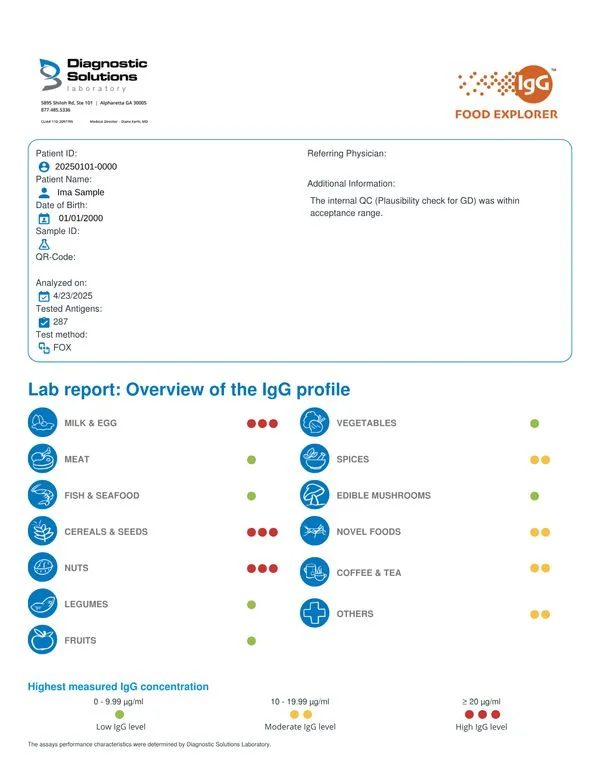


Clinical Information
IgG Food Explorer tests antibody response to over 250* food extracts. Molecular antigens for wheat gliadin and cow's milk are also included for enhanced insight into the sensitivity of those two potentially immunogenic foods.

What are Food Sensitivities?
Food sensitivities are an adverse immune system response to ordinarily harmless foods. These food sensitivities are highly individualized, and symptoms are subtle and often delayed. Adverse reactions can occur from 3 to 72 hours after ingesting the offending food.
Why Test for Food Sensitivities?
Elevated IgG antibodies can promote systemic (whole-body) inflammation, leading to a variety of unwanted symptoms. IgG Food Explorer tests immunoglobulin (IgG) antibodies to a variety of common foods. This extensive food sensitivity test can help practitioners pinpoint which foods may be driving symptoms and best prioritize and individualize a diet and lifestyle plan for patients.
Usually, eliminating foods that promote an IgG antibody response can reduce stress on the immune system, lower whole-body inflammation, and help heal the gut. An antibody-guided elimination diet is more reliable and preferable than generalized diet plans or exclusion diets based on food journaling and diet history alone.
IgG Food Explorer provides in-depth insight into adverse food reactions and the symptoms they create.

What Food Sensitivities Does the IgG Food Explorer Test Look For?
IgG Food Explorer Tests Antibody Response to Over 250* Food Extracts
Molecular antigens for wheat gliadin and cow's milk are also included for enhanced insight into the sensitivity of those two potentially immunogenic foods.
View our IgG handout for a list of foods tested.
* Exact number of food extracts may differ from those shown in the illustration.

Why Choose the IgG Food Explorer?
Simple, Convenient, and Impactful Insight into Symptoms Caused by Foods
The IgG Food Explorer uses an ELISA-based microarray testing panel that specifically and sensitively quantifies IgG antibodies present within a sample.
Using a simple finger-stick blood collection, the IgG Food Explorer is a convenient collection that offers impactful insight into symptoms caused by foods.
Testing allows practitioners to tie patient symptoms directly back to adverse reactions to foods. Food sensitivities can then be addressed through diet to help resolve symptoms and optimize health.
What Patients Can Benefit from Food Sensitivity Testing?
Food sensitivities are common and on the rise. As a result, most people can benefit from food sensitivity testing. The IgG Food Explorer can help patients who wish to optimize their health and those who have experienced chronic symptoms for years.
The range of symptoms related to food sensitivities is vast and varies for each patient.
Symptoms may be gut-related symptoms or extraintestinal, but are not limited to the following:
Gut-Related Symptoms
- Bloating
- Diarrhea
- Nausea
- Constipation
- Reflux
- Irritable Bowel Syndrome (IBS)
Extraintestinal Symptoms
- Autoimmune conditions
- Skin symptoms, including: Eczema, atopic dermatitis, rashes and urticaria, and bags under eyes
- Headaches/migraines
- Blood sugar imbalances
- Musculoskeletal/Joint pain
- Food Cravings
- Behavioral symptoms, including: Anxiety, attention deficit hyperactivity disorder (ADHD), mood swings, and autism spectrum disorder (ASD)
Food Sensitivities and Gut Health
IgG-mediated food sensitivities are often a consequence of poor gut health, poor digestion, dysbiosis, and inflammation – all of which can result in intestinal permeability or "leaky gut." If the gut barrier is permeable and or digestion is suboptimal, maldigested food proteins can leak across the intestinal barrier.
Since gut permeability is not normal physiology, the immune system may detect food protein molecules as foreign or antigenic. T cells then become sensitized and begin the immune response to produce antibodies against these foods. This phenomenon is called the loss of oral tolerance to a particular food.
Food sensitivities and loss of intestinal barrier function is a well-understood connection in functional medicine. However, it is crucial to keep in mind that the intestinal cell barrier is made up of highly interactive layers, including the following:
- Microbiota/Bacteria
- Mucous layers
- Epithelium (includes tight junctions)
- Immune system
A compromise to any of these layers can propagate intestinal permeability. Tight junctions are an important but are not the entire picture when considering a compromised gut barrier.
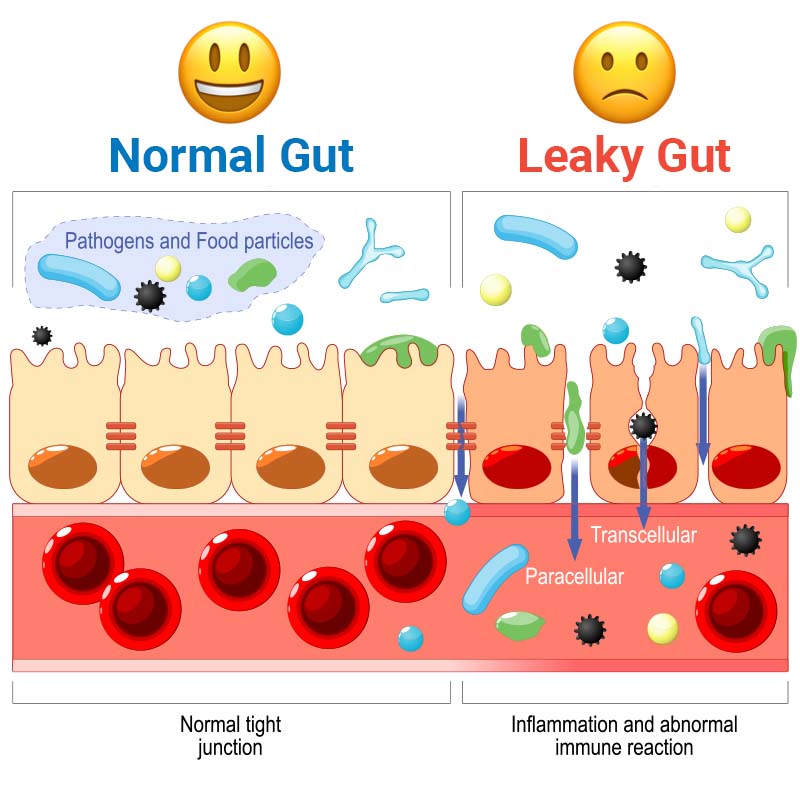
IgG Food Explorer testing for food sensitivities can not only help pinpoint trigger foods that may be exacerbating a patient’s symptoms but can provide essential clues about gut dysfunction, digestive insufficiency, and intestinal permeability.
If a patient has a highly reactive food sensitivity test, GI-MAP follow-up testing is warranted.
Optimize Outcomes With IgG Food Explorer
IgG Food Explorer Frequently Asked Questions (FAQs)
What is the IgG Food Explorer test used for?
The IgG Food Explorer is a food sensitivity test that measures IgG antibody responses to over 250 food antigens. It helps identify delayed immune reactions to foods that may be contributing to inflammation, digestive issues, skin conditions, headaches, and other chronic symptoms.
How does this test differ from food allergy testing?
Unlike IgE allergy testing, which detects immediate allergic reactions, the IgG Food Explorer identifies delayed sensitivity responses that may occur hours or days after eating a reactive food. It's designed to uncover IgG immune sensitivities that may be different or independent from allergies.
What kind of sample is required for the IgG Food Explorer test?
The test uses a simple at-home finger-stick blood collection or it can be collected by a phlebotomist during a blood draw. The sample is then analyzed using a sensitive ELISA-based multiplex platform to quantify IgG antibodies to a wide range of food antigens.
What are common symptoms of IgG food sensitivities?
Symptoms linked to IgG food sensitivities can include:
- Bloating, gas, or constipation
- Brain fog or fatigue
- Skin conditions like eczema or acne
- Joint pain or headaches
- Mood swings or anxiety
How long after eating a reactive food can symptoms appear?
IgG-mediated food reactions are often delayed, occurring 3 to 72 hours after consumption, making them difficult to identify without testing.
How are test results used to guide treatment?
Practitioners use results to build an antibody-guided elimination diet, targeting the foods most likely to trigger symptoms. Removing reactive foods can help reduce inflammation, heal the gut, and support overall health.
How often should someone retest their food sensitivities?
Retesting is typically recommended every 6–12 months, depending on symptom resolution and dietary changes. Immune responses can shift over time as the gut heals or as diet evolves.
Test Ordering Options
- IgG Food Explorer™
- IgG/IgE Combined Explorer
Similar Profiles Often Ordered with IgG Food Explorer
If you already have an account with us, you may order through our online Practitioner Portal accessible at the top of this page.

Complementary Panels for Complex Cases
- The GI-MAP (Microbial Assay Plus) test can be used in conjunction with IgG Food Explorer when practitioners dig deeper into the root cause(s) of food sensitivities. Key markers on the GI-MAP are especially useful when evaluating gut health and food reactions at the same time.
When evaluating patients with food sensitivities, the following sections of the GI-MAP and key biomarkers that provide further insight include:
- Pathogens: Disrupt intestinal barrier
- Normal/Commensal Bacteria: Maintains a healthy gut barrier
- Akkermansia muciniphila: Maintains a healthy layer of mucus
- Opportunistic Bacteria (Pseudomonas): Interferes with protein digestion propagating food sensitivities
- Digestive Markers: Provides insight into digestive function
- SIgA: Reflects healthy microbial diversity and wards off pathogenic/opportunistic overgrowth
- Calprotectin: Reflects inflammation in the gastrointestinal tract, specifically the colon
- Zonulin: Maintains protein regulating tight junction permeability.
Patient Information
Are You a Patient? A healthcare practitioner will need to order the test for you. That can be your own doctor, or contact us so we can help you find a practitioner in your area. Ask your practitioner about IgG Food Explorer, and how it can help you achieve better health!

Optimizing Your Health
We know you want to be proactive about your health. IgG Food Explorer can help your doctor evaluate how you function to either optimize your current health or identify health issues that need attention. Our goal is to help you achieve your health goals through research-based testing and treatment protocols tailored to your unique needs.
Understanding Food Sensitivities vs. Food Allergies
Food sensitivities and food allergies are not the same. Different arms of the immune system facilitate both conditions. Food sensitivities are delayed reactions and elicit IgG antibodies, while food allergies are immediate, potentially life-threatening, mast-cell mediated, and often involve IgE antibodies.
It is best practice to measure IgG and IgE antibodies together as they independently create inflammation and play key roles in symptoms driven by food. A food can elicit an IgG sensitivity response, and an IgE antibody response, or both.
By understanding a patient's food sensitivities, practitioners can tailor dietary protocols that can help resolve uncomfortable symptoms.
NOTE: IgG Food Explorer does not test for dietary intolerances (such as lactose intolerance) and does not test for celiac disease-specific antibodies.
Interested in testing for food and environmental allergies in addition to IgG food sensitivities? Learn about IgE Allergy Explorer, a companion immune response profile to the IgG Food Explorer.
Collection
Collection instructions for IgG Food Explorer and all our other tests can be found on our Collection Instructions page.
Billing
Please visit our Patient Billing Policies page for online answers to your questions. You may also reach us using one of the methods found on our Contact Us page.
REFERENCES
- Natasha Mitchell, Catherine E Hewitt, Shalmini Jayakody, et al. Randomised controlled trial of food elimination diet based on IgG antibodies for the prevention of migraine like headaches. Nutr J. 2011 Aug 11;10:85
- Taheri S. Effect of exclusion of frequently consumed dietary triggers in a cohort of children with chronic primary headache. Nutr Health. 2017;23(1):47-50.
- Steelant B, Farré R, Wawrzyniak P, et al. Impaired barrier function in patients with house dust mite-induced allergic rhinitis is accompanied by decreased occludin and zonula occludens-1 expression. J Allergy Clin Immunol. 2016;137(4):1043-1053.e5.
- Sheen YH, Jee HM, Kim DH, et al. Serum zonulin is associated with presence and severity of atopic dermatitis in children, independent of total IgE and eosinophil. Clin Exp Allergy. 2018;48(8):1059-1062.
- Vancamelbeke M, Vermeire S. The intestinal barrier: a fundamental role in health and disease. Expert Rev Gastroenterol Hepatol. 2017 Sep;11(9):821-834. doi: 10.1080/17474124.2017.1343143. Epub 2017 Jun 26. PMID: 28650209; PMCID: PMC6104804.
- Camilleri M. Leaky gut: mechanisms, measurement and clinical implications in humans. Gut 2019;68:1516-1526.
- Mu Q, Kirby J, Reilly CM, Luo XM. Leaky Gut As a Danger Signal for Autoimmune Diseases. Front Immunol. 2017;8:598. Published 2017 May 23. doi:10.3389/fimmu.2017.00598
- Mullin G, et.al. Testing for Food Reactions: The Good, the Bad, and the Ugly. Nutr in Clin Pract. 2010; 25(2):192-198.
- Atkinson W, et. al. Food Elimination Based on IgG Antibodies in Irritable Bowel Syndrome: A Randomized Controlled Trial. Gut. 2004;53:1459-1464.
- Coucke F. Food intolerance in patients with manifest autoimmunity. Observational study. Autoimmune Rev. 2018 Nov;17(11):1078-1080.
- Wambre E, Jeong D. Oral Tolerance Development and Maintenance. Immunol Allergy Clin North Am. 2018;38(1):27-37. doi:10.1016/j.iac.2017.09.003
- Caminero, A., McCarville, J.L., Galipeau, H.J. et al. Duodenal bacterial proteolytic activity determines sensitivity to dietary antigen through protease-activated receptor-2. Nat Commun 10, 1198 (2019). https://doi.org/10.1038/s41467-019-09037-9
* IgG Food Explorer™ testing is not intended for disease diagnosis. Information provided by Diagnostic Solutions Laboratory does not constitute medical advice; but is for educational purposes only. Services provided are for laboratory testing only. No charge is incurred for ordering collection kits.